
“Do not ask your children to strive for extraordinary lives. Such striving may seem admirable, but it is the way of foolishness. Help them instead to find the wonder and the marvel of an ordinary life, Show them the joy of tasting tomatoes, apples and pears. Show them how to cry when pets and people die. Show them the infinite pleasure in the touch of a hand, make the ordinary come alive for them. The extraordinary will take care of itself.
Extraordinary Lives
The stories of overzealous parents living out their dreams through their children are legendary. When it comes to sports, and we are talking a plethora of sports, the good, the bad and the ugly certainly have shone through. You don’t have to search too hard to find stories of physical and mental abuse towards minors by parents who are fueled by an all-consuming desire to taste the winner’s cool aid. Even in the case of those that have made it to the top, there are not many examples of longevity. Those who have shone brightest, dim quite quickly and those that have managed to hang around seem to struggle with the mental scars of constantly trying to please. They say that to be extraordinary you have to do extraordinary things but at what cost to the future well-being of that child?
Ty Tryon
“Everything to be said is up on the scoreboard.”
The guy with the name straight out of a Chevy Chase movie, (his father named him after Chase’s character in the film Caddyshack,) remains to this day one of the biggest enigmas to hit sport let alone golf. His millionaire father built him a mini golf course in their back garden (a five-acre back garden!) when he was just four years of age. His grip on Ty continued throughout his childhood years, to such an extent that he moved house and home to Orlando so Ty could attend the David Leadbetter golf academy, (at an eye-watering 40K a year!) Cue a personal trainer at eleven, (yes eleven years of age,) followed by a sports psychologist. Nothing was too much for Bill Tryon as he nurtured the next Tiger Woods. At sixteen years of age, Bill decided that Ty should turn pro, there was just one problem, the minimum age requirement was eighteen on the PGA Tour, but Bill yet again circumvented that problem with the threat of a day in court. So, could the prodigiously talented Ty deliver at the grueling Tour school?
The answer was emphatic YES! Ty breezed through all three stages of tour school at the tender age of just seventeen, the youngest golfer ever to qualify for the big show that is the PGA Tour. The stats were even more impressive, through fourteen rounds of golf he broke par eleven times and was thirty-six under par for the 252 holes played. So, it was off to tour in 2002, the multi-million dollar deal with Callaway secured and world domination.
Except that it didn’t quite work out like that, it didn’t work out at all. When the grind of Tour came calling Ty found he had no answer. He got sick in year one, lost his card on a medical extension in year two making just four cuts in seventeen starts. Has attempted a couple of comebacks since but nada.
“Ty came up in the Tiger Woods era. Tiger quadrupled prize money and made professional golf really what it is today form an income standpoint. [Ty] grew up in that. He was in that sort of rush. Everybody was looking for the new young Tiger, and there he was: 16-year-old Ty Tryon. Good looking kid, hit the ball a mile. Here’s the next Tiger. That’s what they were looking for. A lot of mistakes were made.” David Leadbetter, Ty’s coach.
Michael Phelps
“You can’t put a limit on anything. The more you dream, the farther you get. If you want to be the best, you have to do things that other people aren’t willing to do.”
Recounting the success that Michael Phelps has had in the swimming pool is a futile task. Suffice to say he rewrote the history books and it’s doubtful that his records will be broken any time soon. When you start swimming in the Olympics at the tender age of 15, you are going to amass a lorry load of medals if your talent permits. He had both the time and the talent. But the harsh reality of his younger years was a far cry from the glory of Olympic gold, that place where he garnered adoration was his sanctuary from a miserable childhood. His parents divorced when he was just nine, and he took up swimming as a way to combat his ADHD, he had limitless energy. Both his elder sisters swam even though he admits he hated swimming when he first started. He met his coach, Bob Bowman, when he was just eleven, the no-nonsense Bowman was a tough taskmaster, an intimidating authority figure, who drilled Phelps relentlessly. Within this regime, Phelps found his comfort zone. But at what cost? After breaking the record for the most gold medals won at a single Olympic Games, Phelps in his own words felt that he “despised the image of perfection his success had created.”
Since retiring following the 2016 Rio Olympic Games, he has had many daily struggles and continues to speak openly about his dark patches and contemplating suicide.
“Look, I’m human, and I struggle,” Phelps says. “For me, I obviously had to learn to live life outside of who I was in the pool, as a real person.”
Mikaela “Mika” Shiffrin.
“I don’t think there’s a proper way to raise an Olympic champion, in that the “crazy path” I took “could not be replicated.”
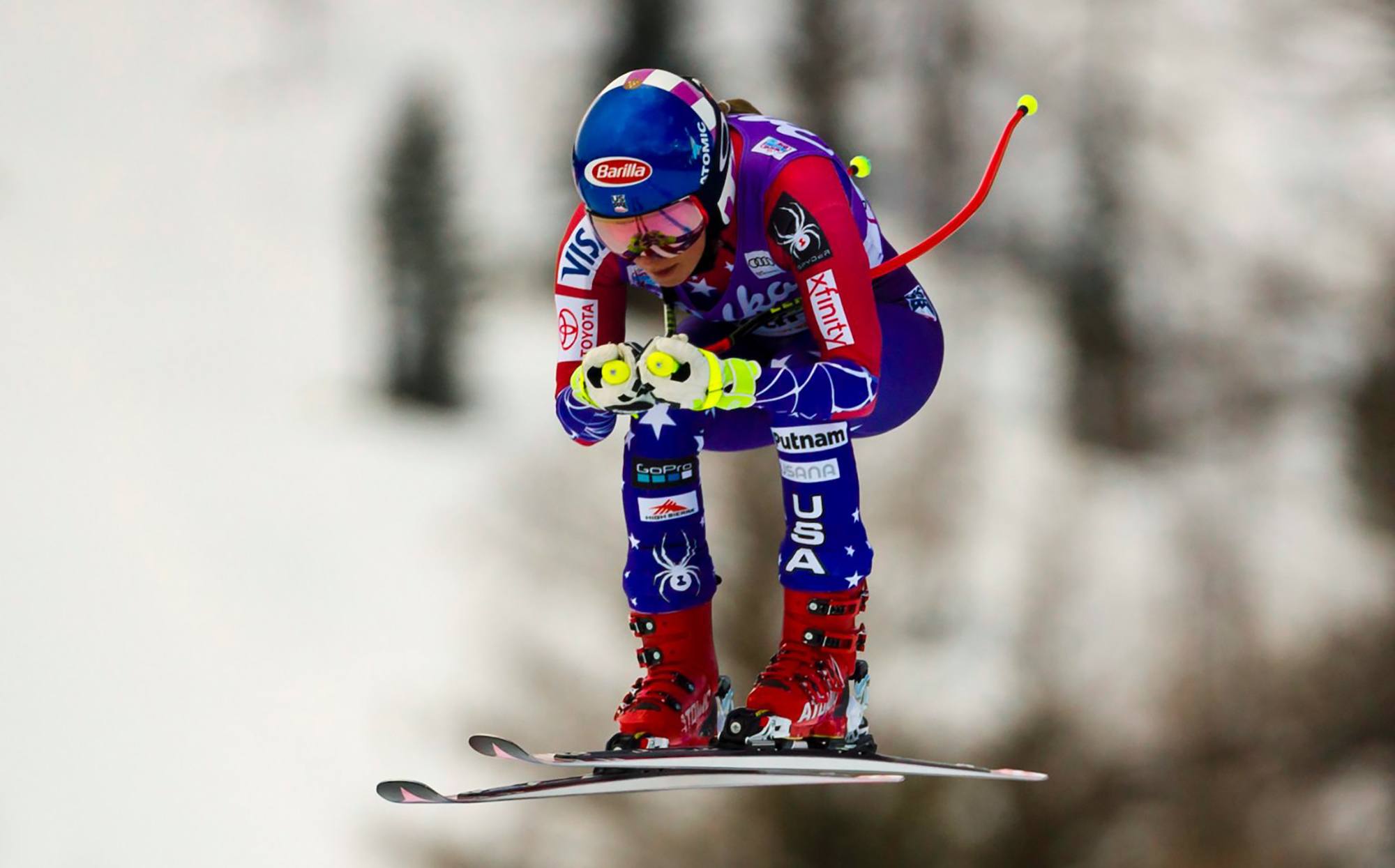
In 2013 Mikaela Shiffrin, an American downhill skier won a gold medal at the World Championships held in Austria and became the youngest woman in 39 years to claim the slalom season title.
Mika, as she is known, was born on March 13th, 1995 in Vail, Colorado, USA. Both her parents were competitive skiers, and she started learning how to sky at two years of age on a plastic pair of skis in her driveway. She followed a different path to success than many other athletes, while others were competing in races she spent much of her time perfecting her technique through the use of motor learning drills over a period of time. After early success with the help of two coaches, she joined the World Cup circuit full time in 2011 and toured Europe with her mother to guide her. She has competed in two Olympics in 2014 and 2018, winning one gold medal in both Sochi and Pyeongchang. She is a serial winner to this day having won 15 times so far this season.
“You know, it’s not necessarily the medalists who get the most out of the Olympics. It’s those who are willing to strip down to nothing and bear their soul for their love of the game. That is so much greater than Gold, Silver, or Bronze. We all want a medal, but not everyone will get one. Some are going to leave here feeling like heroes, some will leave heartbroken, and some will have had moments when they felt both- because we care. That is real. That is life. It’s amazing and terrifying and wonderful and brutal and exciting and nerve-racking and beautiful. And honestly, I’m just so grateful to be part of that.”
The message, the Shiffrins insist, is that their approach, which stressed skill development and shunned goal setting, and always involved the family, has been the secret. If there was a secret.
Whose dream is it anyway?
Why do about three-quarters of children drop out of a sport by the age of thirteen? Does any child really know if they want to be a sports star at an early age or are they just trying to please and be praised? It’s a tough question as sports like tennis, swimming and gymnastics require very young participants to have any chance of success. But for every Mikaela Shiffrin, there are millions of kids that don’t make it. Most kids leave a sport because they don’t think it is fun anymore, maybe the continual push by parents can send them over the edge. Too much early competition and sky-high expectations can also erode the confidence levels of children leaving them with a lifetime to repair the damage!
I will leave the last word to that noted golf writer Jamie Diaz, “There is no formula. Other than good common sense and good parenting and let the kid take it where he takes it.”

Thank you for taking the time to read! It is appreciated. Follow our Ryder Cup Captain at our dedicated Ryder Cup page and over at his website. Finally, don’t forget to sign up for my FREE monthly digital magazine plus a Charity Kindle book for Xmas which this year is being produced for Goal. Finally, you also have a chance to win a dozen Titleist Pro V1’s each & every month. Tadhg.

Tadhg Harrington is a full time, professional golf instructor, and owner of the Harrington Golf Academy, based in Dublin, Ireland. He is a graduate of the Titleist Performance Institute and Setanta College. He is the eldest brother of three-time time Major Champion, Padraig Harrington.
He succeeds, employing empathy, passion and exceptional customer service, teaching above the noise, the quick tips, and the latest fads and is truly unique in the Irish golf industry.
The Harrington Golf Academy provides long term coaching programs designed to bring sensory processing to motor learning skills. Tadhg teaches the long game at Drynam Park Golf Centre and short game at Roganstown GC. His business partner, Ex European Tour Player, Rebecca Codd, also teaches full time at Drynam Park Golf Centre.